

A newly released list of members representing the 32 constituencies in the Oyo State House of Assembly has revealed a significant gender imbalance, with only three women occupying seats in the legislature.
The list shows that the Assembly is overwhelmingly dominated by male lawmakers, who account for 29 of the 32 members, while women make up less than 10 percent of the legislative body.

Among the female lawmakers are Tolani Mary Adigun, representing Ibadan South West I, Faniyi Olayinka O., representing Ibadan South West II, and Funmilola Obisesan, representing Ona-Ara State Constituency.
The remaining constituencies are represented by male legislators, covering all geopolitical zones of the state, including Ibadan, Oke-Ogun, Ogbomoso, Oyo, Ibarapa, and other areas.
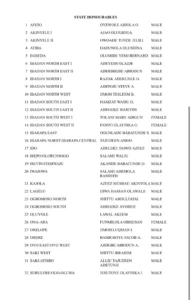
The composition reflects representation from all 33 local government areas through the state’s 32 constituencies, with some constituencies covering more than one local government area. They include Afijio, Akinyele I and II, Atiba, Egbeda, Ibadan North East I and II, Ibadan North I and II, Ibadan North West, Ibadan South East I and II, Ibadan South West I and II, Ibarapa East, Ibarapa North/Ibarapa Central, Ido, Irepo/Olorunsogo, Iseyin/Itesiwaju, Iwajowa, Kajola, Lagelu, Ogbomoso North, Ogbomoso South, Oluyole, Ona-Ara, Oorelope, Oriire, Oyo East/Oyo West, Saki West, Saki/Atisbo, and Surulere/Ogo-Oluwa.
Political observers have noted that while the Assembly reflects broad geographical representation across Oyo State, there remains a need for greater female participation in elective politics. They argue that increasing women’s representation would promote inclusiveness and ensure broader perspectives in legislative decision-making.
Stakeholders have also called on political parties to provide more opportunities for women and young people seeking elective offices, especially as preparations for future elections gradually gather momentum.
The Oyo State House of Assembly continues to play a vital role in lawmaking, oversight of the executive arm of government, and representation of the interests of constituents across the state.