

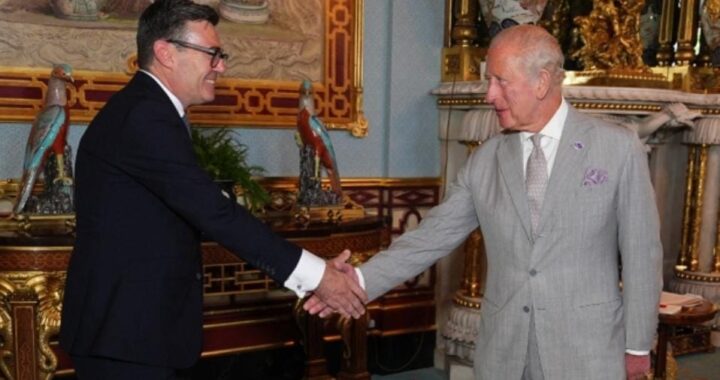
The United Kingdom has entered a new political era following the appointment of Andy Burnham as the country’s new Prime Minister after an audience with King Charles III at Buckingham Palace.
Burnham’s appointment followed constitutional procedures in which the monarch formally invited him to form a new government after the outcome of the latest political developments.
During the meeting, King Charles III officially asked Burnham to assume office and lead the next administration, paving the way for the formation of a new Cabinet and the commencement of a fresh phase in British governance.
In his first remarks after assuming office, Burnham pledged to provide strong and responsible leadership while prioritising economic recovery, improved public services, healthcare reforms, national security, and policies aimed at improving the living standards of citizens.
The new Prime Minister also promised to unite the country, strengthen democratic institutions, and work closely with Parliament to address pressing national challenges.
Political analysts described the transition as a significant moment in British politics, noting that the new administration will face immediate tasks, including tackling inflation, stimulating economic growth, improving the National Health Service (NHS), addressing immigration concerns, and enhancing the UK’s international relations.
World leaders have begun congratulating Burnham on his appointment, expressing optimism about continued cooperation with the United Kingdom on issues of mutual interest, including trade, security, climate change, and global development.
As the new government takes shape, attention is expected to focus on Cabinet appointments and the policy direction the administration will pursue in the coming months.